Calculated Moves and Silent Pressure: The Art of Winning at the Digital Table
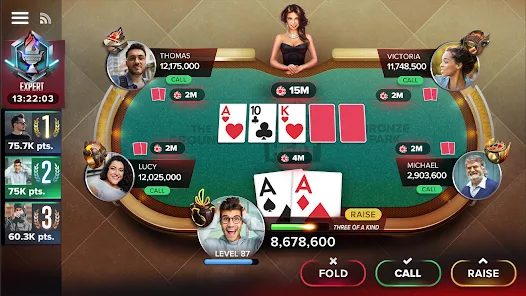
There is something uniquely intense about a digital card table. No physical chips clacking. No faces to read. No casino noise fills the room. Just a screen, a timer, and the constant awareness that every decision is recorded, repeated, and judged by results.
Online poker strips the game down to its core: timing, calculation, and psychological pressure. In this environment, success isn’t built on dramatic moments — it’s built on quiet consistency. Players don’t win because they “get lucky.” They win because they make better decisions more often than the people around them.
And in competitive ecosystems such as poker, where tables run constantly, and tournament schedules are packed, those small edges become everything.
The Quiet Advantage of Precision
Unlike most casino games, poker doesn’t reward passive participation. Slots don’t care who you are. Roulette doesn’t care what you believe. Blackjack has fixed mathematics. But poker is a living ecosystem — shaped by the decisions of everyone at the table.
That’s why precision matters.
Online poker rewards players who treat every hand as a small calculation:
- What range am I representing?
- What range is my opponent likely holding?
- How does the position change this spot?
- What is the risk-to-reward ratio?
- What happens if I get called?
Players who consistently ask these questions don’t look flashy — they look dangerous. They don’t create chaos. They create pressure.
Because in poker, pressure doesn’t come from aggression alone. It comes from accuracy. When someone raises with the right hand at the right time, opponents start feeling trapped. They fold too often. They call too loosely. They second-guess.
That’s silent pressure: the kind that doesn’t announce itself, but changes the table anyway.
Reading Without Seeing: Digital Tells
One of the most fascinating parts of online poker is that it removes face-to-face interaction entirely. No body language. No shaking hands. No eye contact. And yet, the game is still full of tells.
They just look different.
Online tells show up through:
- Betting speed
- Consistency of sizing
- Timing under pressure
- Unusual pauses
- Repeated patterns in certain situations
For example, some players snap-bet when they’re weak because they want to look strong. Others hesitate when they’re strong because they’re thinking about how to extract value. Some players always use the same bet size no matter what, which makes them easy to read.
Skilled players build their strategy around this. They learn how people behave when they’re comfortable, and how they behave when they’re uncomfortable. They don’t need faces — they read habits.
And once you learn to read habits, poker becomes less like gambling and more like decoding.
The Tempo Problem: Online Poker Moves Fast
Speed is one of the biggest advantages of online poker — and also one of its biggest traps.
In a live casino, the pace forces natural breaks. The dealer shuffles. Players talk. Chips are counted. Hands take time.
Online, everything is optimized for efficiency. You can play more hands per hour. You can play multiple tables. You can enter tournaments instantly. You can switch formats in seconds.
That speed creates pressure. It tempts players to react instead of think.
Many people lose online not because they don’t understand poker, but because they stop thinking clearly at high speed. They play hands out of boredom. They chase losses. They make fast calls because the timer is ticking.
Calculated players do the opposite.
They build internal tempo control. They slow their decisions down mentally even when the platform moves quickly. They don’t allow the pace to dictate their strategy.
Because when you control your tempo, you control your outcomes.
Pressure Is a Tool, Not a Mood
A lot of players think pressure is something they “feel.” But in poker, pressure is something you apply.
Silent pressure isn’t about being emotional or intense. It’s about creating situations where opponents feel forced to make difficult choices.
That can happen through:
- Consistent 3-betting in the right spots
- Applying pressure on turns and rivers when ranges narrow
- Using sizing that forces uncomfortable decisions
- Attacking weak positions (like blinds) repeatedly
- Recognizing when someone is playing too cautiously
Poker is full of players who want to avoid conflict. They want to “see flops.” They want to “play safe.” They want to “wait for a hand.”
Those players become targets in online environments.
Calculated players don’t need to bully. They simply recognize weakness and apply pressure with logic. The pressure feels silent because it isn’t loud or reckless — it’s controlled.
The Digital Table Rewards Repeatable Strategy
One reason online poker is so attractive is that it’s repeatable.
In other casino games, you can’t improve much beyond understanding the basics. In poker, improvement is endless because the game is built on decision-making. Every session gives you thousands of chances to refine your approach.
Online platforms also give players tools that live games cannot:
- Hand histories
- Session tracking
- Performance statistics
- Table notes
- Long-term results analysis
This transforms poker into something closer to performance training.
Winning players review their mistakes. They study patterns. They learn from repetition. Over time, their strategy becomes cleaner, sharper, and more efficient.
And efficiency is what builds long-term success.
Winning Isn’t Loud — It’s Consistent
The biggest myth about poker is that winners are fearless. In reality, winners are consistent.
They don’t try to win every hand. They don’t chase every bluff. They don’t play to “prove” anything.
They play to make decisions that hold up over time.
That mindset is what allows players to last in competitive ecosystems. It’s what separates someone who has a good night from someone who builds long-term results.
In online poker, the goal isn’t to look impressive. It’s to make your decisions repeatable.
Because repeatable decisions create repeatable outcomes.
Final Thoughts
The digital table is a quiet place — but it’s not a soft one.
Online poker is a space where calculated moves matter more than dramatic moments. Where silent pressure wins more pots than reckless aggression. And where the players who thrive are the ones who understand that the game is built on structure, not chaos.
Every session is a test of focus and execution. The players who rise aren’t always the loudest. They’re the ones who play with precision, control tempo, and apply pressure intelligently.
At the digital table, mastery isn’t announced.