What the crystal balls really mean in Dragon Ball Z?
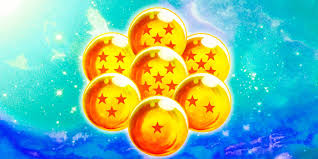
They look simple at first glance: bright orange spheres, red stars inside, a glow that feels almost friendly. In Dragon Ball Z, those crystal balls never stay innocent for long. They sit at the centre of quests, bargains, betrayals, reunions, and turning points that reshape entire lives. Many viewers remember the famous wish-granting moment, yet the deeper pull comes from what the Dragon Balls do to people. They create hope when everything seems finished. They tempt the greedy, the desperate, the proud. They turn grief into a mission, courage into a decision, rivalry into uneasy teamwork. Like a compass that only points to desire, they reveal what each character truly wants when there is no time left for pretending. The meaning of the crystal balls in Dragon Ball Z sits on two levels. On the surface, they are a set of artefacts with strict rules. Underneath, they become a symbol of second chances, responsibility, and the weight of wishing for something that cannot be taken back. That mix is why the Dragon Balls feel iconic rather than decorative.
Why the Dragon Balls matter more than their “magic” ?
In many series, magical objects exist to decorate the world-building. In Dragon Ball Z, the Dragon Balls behave more like a pressure valve for the story. When a battle ends in tragedy, they offer a way forward. When enemies arrive with overwhelming power, they become a target, a bargaining chip, a reason to travel, a reason to protect Earth even when victory seems unrealistic. That function gives them meaning that goes beyond “granting wishes”. The Dragon Balls embody possibility in a universe where power levels escalate fast and consequences can become cosmic. They keep the narrative from locking into permanent despair, while still demanding effort. Nobody “gets” a wish for free. The search, the conflict, the risk, the coordination those are the price.
There is also a quieter meaning: the Dragon Balls highlight that strength is not the only tool. Characters who can punch through mountains still end up chasing spheres hidden under the sea, in deserts, in enemy territory. It’s a reminder that knowledge, teamwork, timing, and restraint often matter as much as raw force. They also carry a moral edge. Wishing is not neutral. The series repeatedly shows that what sounds like a clever shortcut can create new problems, new enemies, or a new imbalance. The Dragon Balls are a promise, though promises can be misused. That tension keeps them emotionally charged rather than convenient.
What the red stars and the number seven symbolise ?
The most obvious visual code is the stars. Each ball has a number of red stars, one through seven, forming a complete set. On a practical level, the stars are a tracking system. On a symbolic level, they give the Dragon Balls an identity: seven separate pieces that only gain full meaning when united. That idea mirrors a recurring theme in Dragon Ball Z: unity creates outcomes that individuals cannot reach alone. Goku may be exceptional, Vegeta may be relentless, Piccolo may be strategic, yet the Dragon Balls force cooperation. Even rivals need allies to gather them, guard them, interpret their use, and decide the wish. The stars turn the objects into a visible reminder that “one” is never enough.
The number seven also carries cultural resonance as a number often associated with completeness. Dragon Ball Z does not lecture the viewer about numerology, yet the set structure lands naturally: seven items, one dragon, one wish cycle. The rule-based repetition gives the Dragon Balls a ritual quality, almost like a story heartbeat. When the seven are assembled, something ancient wakes up. When they scatter, the world returns to pursuit and uncertainty. As a metaphor, the stars feel like milestones. Each star is a step in a quest that tests patience, courage, and ethics. The glow and colour can feel warm, though the motives around them are often sharp. They are beautiful objects that attract ugly behaviour, which makes their symbolism richer.
How the Dragon Balls “work” in DBZ and why the rules are part of the meaning ?
Understanding their meaning requires knowing the rules, because the rules shape behaviour. In Dragon Ball Z, the Dragon Balls summon Shenron when the full set is gathered and the activation phrase is spoken. A wish is granted within defined limits. After use, the balls become inert and scatter, creating a waiting period before they can be used again. These limitations matter because they prevent the Dragon Balls from turning into a cheat button. If wishes were limitless, characters could erase consequences instantly. Dragon Ball Z instead treats wishes like a resource: valuable, scarce, timed. Scarcity creates drama, though it also creates ethics. Who deserves the wish? What is urgent? What is fair? What is dangerous?
The cycle also teaches a form of responsibility. The Dragon Balls can restore lives, yet repeated reliance on them changes the culture of the characters. Some begin to assume that death is reversible, then the story reminds everyone that this assumption is risky. Constraints exist. The wrong wish can backfire. The wrong timing can make the wish impossible. The wrong enemy can steal the set and reshape reality. The rules also generate a sense of ritual. Gathering, protecting, coordinating, summoning it is almost ceremonial. That ceremony gives the Dragon Balls gravity. They are not random jewels. They are a structured power that demands calm thinking under pressure.
Second chances, grief, and the cost of wishing
The most emotional meaning of the Dragon Balls in Dragon Ball Z is tied to loss. When characters die, the Dragon Balls become a lifeline. That makes them a symbol of hope, though hope in DBZ is never purely soft. It is hard-earned, fought over, defended, sometimes delayed. This is where the Dragon Balls feel like a lighthouse in a storm: they do not stop the waves, yet they give direction. They allow characters to keep moving when grief could freeze them. A wish can bring someone back, yet the journey to make that wish happen forces people to confront what they value and how far they will go.
At the same time, the series keeps reminding viewers that wishing is not a clean eraser. Trauma remains. Enemies remember. Consequences ripple. The Dragon Balls cannot replace maturity, judgement, or meaningful change. They can revive bodies, though they cannot always restore innocence. There is also an ethical layer. If you can reverse death, how do you decide whose death matters most? Do you wish for personal comfort or collective safety? Do you fix yesterday or protect tomorrow? The Dragon Balls constantly push characters into these questions, even when the show expresses them through action rather than speeches.
Why villains chase the Dragon Balls and what that reveals about power ?
Villains go after the Dragon Balls for obvious reasons: wishes can offer immortality, dominance, control. Yet the deeper point is that villains often represent power without restraint. They see the Dragon Balls as a tool to remove all limits, to turn the universe into a locked door with only one key their key. That framing makes the Dragon Balls a mirror. They reflect the user’s mindset. A hero tends to treat them as a last resort, linked to protection and repair. A villain tends to treat them as a shortcut to permanent hierarchy.
This difference also highlights a theme in Dragon Ball Z: strength alone does not guarantee stability. A villain may be physically superior, yet still chase the Dragon Balls because power is never enough for someone driven by fear of losing it. In that sense, the Dragon Balls symbolise insecurity. The desire for immortality is rarely just ambition; it often looks like panic disguised as confidence. The pursuit of the Dragon Balls also creates unusual alliances. Characters who hate one another may cooperate for a shared goal. That cooperation can feel tense, fragile, opportunistic. It adds realism to the moral landscape. People are not cleanly split into “good” and “evil” when a single wish could change everything.
The Dragon Balls as a cultural icon: collecting, memory, and fandom
Outside the plot, the crystal balls became one of the most recognisable symbols in anime. Fans collect replicas, figures, and themed displays because the Dragon Balls carry a compact story: adventure, friendship, struggle, reward. Owning a replica is like holding a small piece of that world in your hand. Collectors often choose a favourite star count, linking it to a personal number, a character, or a memory. That emotional link matters. The Dragon Balls are not just “props”. They are an emblem of a whole era of anime for many viewers, tied to childhood, to first discoveries of long-running sagas, to shared conversations in school or online.
If you enjoy collecting, the visual identity is part of the appeal. High-quality anime figures often sit beside Dragon Ball collectibles because the display tells a story without needing words: a hero’s stance, a rival’s glare, and the quiet glow of a symbol that started countless quests. That fandom layer reinforces the meaning inside the manga and anime. The Dragon Balls were designed to be memorable. Their simplicity makes them universal. Their story function makes them legendary.
How Dragon Ball “figures” tie back to the meaning of the crystal balls ?
Dragon Ball Z merchandise works because it connects to themes, not only aesthetics. When a figure of Shenron, Goku, Vegeta, or a fusion character stands near a set of Dragon Balls, it captures the series’ core contradiction: individual strength versus collective outcomes. The balls represent the goal that pushes the world into motion. The figures represent the people changed by that motion. Displays often recreate famous moments: a summoning pose, a battlefield, a wish about to be spoken. That is why Dragon Ball figures feel meaningful for collectors who care about narrative details. They are physical reminders of scenes where choices mattered as much as punches.
This is also where the Dragon Balls behave like a “story engine”. They can bring characters together across arcs, across transformations, across shifting loyalties. A figure collection that includes both heroes and villains, placed around the Dragon Balls, mirrors what the series repeatedly shows: everyone wants something, though not everyone should get it. For viewers who are still exploring Dragon Ball Z, this link between object and character offers a useful lens. The Dragon Balls matter because they force decisions. They expose motives. They invite conflict. They promise relief, though they demand consequences. They are not only magical items; they are a narrative contract with the audience: no matter how dark the moment becomes, there is a path — provided someone is willing to pay its price.
What to remember when you think about the Dragon Balls ?
The crystal balls in Dragon Ball Z carry meaning because they represent hope with rules. They offer second chances, though they also attract greed, fear, and control. They push characters to cooperate, to argue, to choose, to take responsibility for what a wish can change. If you see them as a symbol rather than a shortcut, they become one of the clearest signatures of the series a small set of glowing orbs that can move an entire universe, the way a single spark can light a long fuse. What do the Dragon Balls represent for you: comfort, temptation, or the idea that even the worst outcome can be challenged?